CORDED • SINGLE STAGE • 120V / 15A
Westinghouse WSnow22 Review: Is Corded Snow Clearing Practical?
A wide corded snowblower for an outlet-friendly paved route. The buying decision starts with your cable path, not the width of the auger.
Research-based buying review. We have not hands-on tested this model. Manufacturer claims and our buying judgments are identified below.
As an Amazon Associate I earn from qualifying purchases. Amazon links are affiliate links. Our recommendations reflect equipment fit and documented specifications.
Our buying verdict
The WSnow22 belongs on the shortlist for paved driveways and walkways that are fully reachable with a suitable outdoor extension cord. Avoiding a battery purchase can make sense for occasional clearing. We would look elsewhere if the cable route is awkward, outages are common during storms, or dense roadside snow is the main job.
Published specifications, not our measured results. Manufacturer model reference ↗.
Reasons to shortlist it
- No battery or charger purchase is required to run the corded machine.
- A 22-inch clearing path, adjustable chute and dual LEDs provide a useful paved-route setup.
- A conventional outlet-powered system avoids waiting for snowblower batteries to recharge.
Tradeoffs to consider
- The complete working route must fit a safe, correctly specified cord arrangement.
- Power outages stop corded clearing, and the cable needs attention on every pass.
- Published weight figures conflict; buyers with lifting limits should confirm the actual unit.
Start by walking the cable route
The most important WSnow22 accessory is the right extension cord, and the most important specification may be the distance from your outlet to the farthest corner. Measure the actual path the cord must follow around vehicles and other obstacles. A straight-line distance across the yard can understate the required reach. Leave enough freedom for normal maneuvering without pulling against the plug.
A simple paved rectangle near an appropriate outlet makes a strong case for corded equipment. Several disconnected paths, a sidewalk far from the house or a route wrapped around parked cars make the cable a larger part of the job. Walk the route before you buy and think through both the outgoing pass and the turn back. That exercise is more useful than assuming a longer cord will solve every layout.
The trade is straightforward: the WSnow22 avoids a snowblower battery investment, but you manage a cable during clearing. If you already dislike the cord on another yard tool, take that preference seriously. The EGO SNT2125AP is worth comparing when cordless movement would remove a recurring obstacle rather than simply add convenience.
Does corded clearing fit your property?
An appropriate supply near the work area.
Keep within the manual’s length limit.
Account for cable management on each pass.
What the 22-inch width means for your driveway
The width can be useful on open pavement because each pass covers a substantial strip. Real progress also includes overlap, turns, avoiding obstacles and choosing where to discharge. A narrow walkway with several corners may gain less from extra width than a simple driveway. Measure gates and access routes rather than assuming the clearing width equals the machine’s total outside width.
Our fit recommendation is routine paved-route cleanup, especially lighter snow that can be cleared before it becomes compacted. Westinghouse’s specification table identifies light, fluffy snow, even though its promotional copy is more expansive. We would not make the purchase primarily for frozen roadside piles. The 13-inch intake is a physical dimension, not our promise of easy progress through 13 inches of wet accumulation.
Snow placement can also be a limiting factor. The advertised maximum throw is not a guarantee in wet snow or an unfavorable wind. If there is little space beside the driveway, you may end up moving some snow twice. Think about the usable discharge area and how it changes after several storms. Those practical limits remain even when the power supply is continuous.
Cord sizing: read the exact model’s instructions
The downloaded WSnow22 manual’s cord chart specifies 14 AWG up to 50 feet and 12 AWG above 50 through 100 feet, and says not to exceed 100 feet. The current manufacturer product table is more conservative at 50 feet, listing 12 gauge there. Our buying recommendation is to choose an outdoor, all-weather 12 AWG cord for a 50-foot route and confirm the instructions supplied with your unit.
Use GFCI protection and the specified outdoor-rated cord, inspect its condition, and follow the manual’s connection and restraint guidance. Keep the cable clear of the auger and avoid straining the connection. A thin household extension lead is not a useful substitute. The lower gauge number means a heavier conductor; length and current demand matter together.
Include the appropriate cord in the total purchase price. Do not extend the working route beyond the manual’s limit by joining additional cords. If the approved arrangement cannot reach the property you need to clear, a cordless machine or a different clearing plan is the better buying decision. Our graphic below highlights the source difference rather than silently borrowing a cord rule from another snowblower.
Compare the exact offer
Match the model, selected kit, condition and seller. Check the current delivered price and return terms before ordering.
Controls, power outages and physical handling
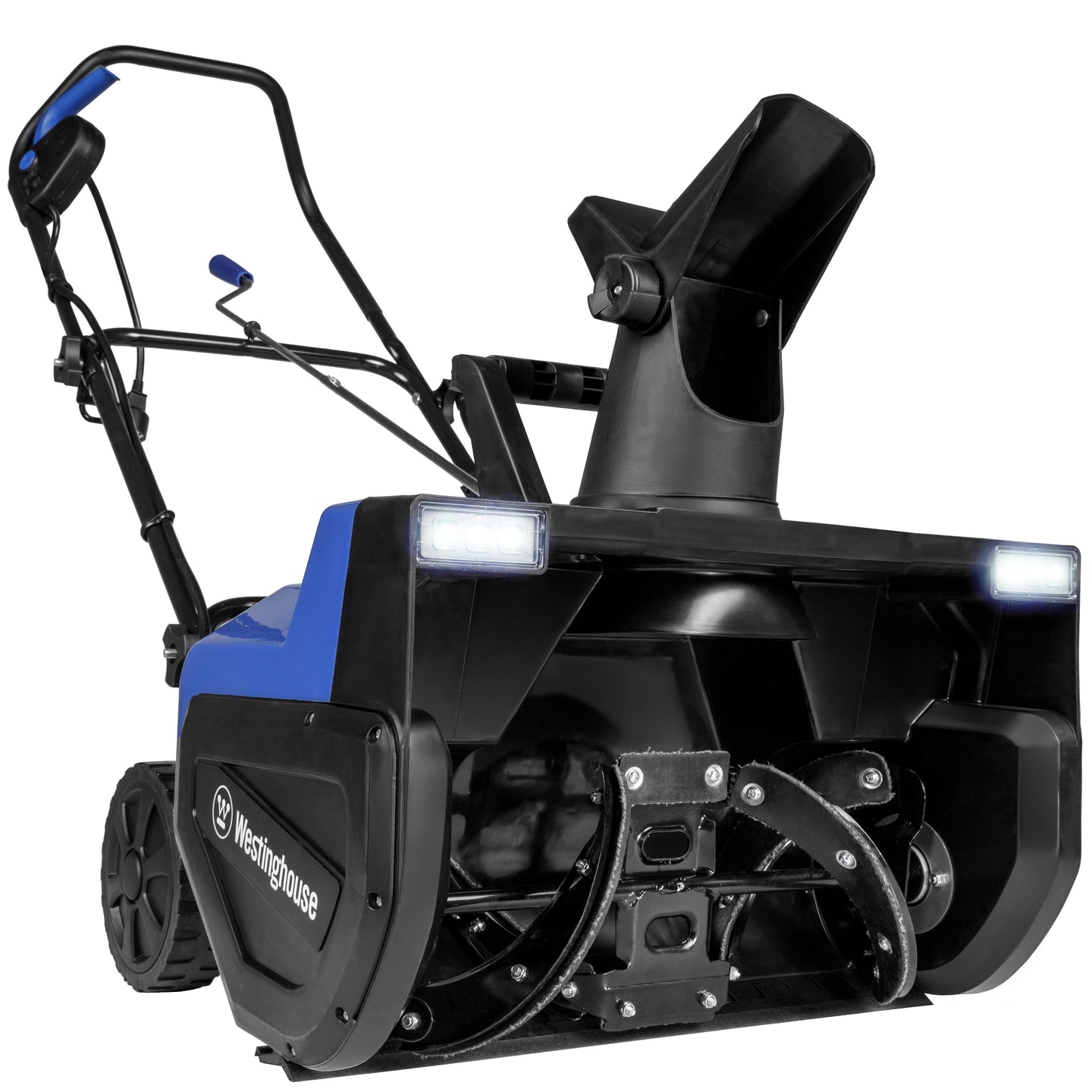
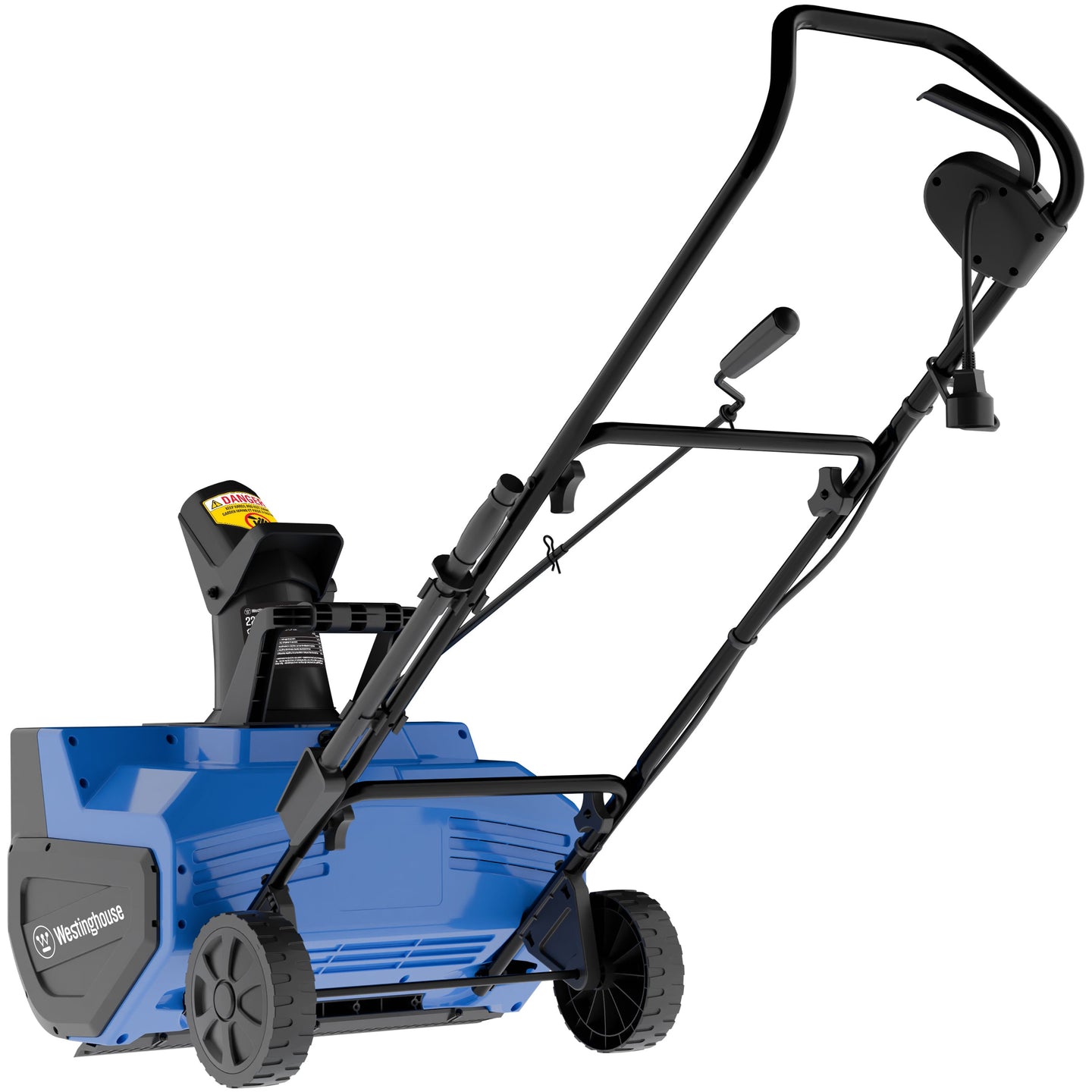
The WSnow22 uses a starting control and switch lever, an adjustable chute and dual lights. Those are useful basics for routine clearing. Before the first storm, familiarize yourself with the controls and where the cord will lie during turns. Lights on the machine supplement visibility; they do not make poor visibility or unsuitable conditions safe.
A corded motor avoids a battery-recharge pause while electricity is available, but continuous access to power is not the same as unlimited clearing capacity. The machine still has a load it can handle, the operator needs breaks, and a storm can interrupt household power. If outages coincide with your heaviest snow, include that fact in the decision and keep a separate practical backup plan.
Weight deserves particular care. The manufacturer’s web table lists 26.5 pounds, while the checked Amazon listing lists 34.6 pounds. We have not weighed a unit and do not resolve that conflict by choosing the more attractive figure. If lifting, carrying up steps or loading a vehicle is part of your routine, ask the seller to verify the assembled corded model’s weight and dimensions before purchase.
WSnow22 cord guidance: check both sources
Ownership cost and model confusion
This review covers WSnow22 with a 120V corded supply. WSnow22 48V is a separate cordless product; a listing that includes batteries is not the configuration reviewed here. Compare the full title, power source and included equipment every time you switch retailer variants. Product pictures should also match the corded housing and controls, rather than merely showing a blue snowblower.
The ownership budget includes the machine, the correct cord and eventual wear parts. Inspect the scraper, rubber auger edges, fasteners and cord as instructed. Ask about replacement-part supply and the applicable warranty for the seller you choose. Removing battery replacement from the budget does not make the machine maintenance-free.
The Amazon offer for the exact corded model was available when checked. We have deliberately left price and inventory counts out of the review because those can change quickly. Compare the complete order cost, condition and return terms. A lower price on a different size, a cordless bare tool or a refurbished machine is a different offer.
When another snowblower makes more sense
Compare the Snow Joe SJ627E if you want another corded reference. Match cord guidance to each machine’s own instructions; rules from one review should not be assumed to apply to another. For a compact cordless comparison, read the WORX WG471 review and consider the cost of its complete battery setup.
For recurring dense snow and a need for powered wheel travel, the Toro Power Max e24 is a more relevant comparison than a second budget corded machine. Start with the snowblower buying hub if you are still deciding between power sources and stages. The cheapest workable setup is the one that reaches the whole job and fits the conditions.
8 frequently asked questions
Is this WSnow22 battery powered?
No. This review covers the 120V, 15A corded WSnow22. The WSnow22 48V is a different cordless model. Match the power source and exact variant on the seller page before comparing the price or photographs.
What extension cord should I buy?
Use an appropriately rated outdoor, all-weather cord and GFCI protection. The manual allows 14 AWG up to 50 feet and 12 AWG above 50 through 100 feet; the web table lists 12 AWG at 50 feet. We recommend the heavier 12 AWG option for a 50-foot purchase and checking the instructions supplied with your machine.
Can I use more than 100 feet of extension cord?
The WSnow22 manual says not to exceed 100 feet. If the complete route needs more reach, choose a different clearing plan or a suitable cordless machine. Do not treat additional joined cords as a way around that limit.
Can it handle wet snow and the ridge left by a plow?
We would not select it primarily for dense plow berms or refrozen accumulation. Those conditions can be much more demanding than routine lighter snow. Its published intake and throwing figures are manufacturer specifications, not results from our own snow test.
Would you recommend the WSnow22 for gravel?
Our buying recommendation is for pavement. The manual discusses precautions on loose surfaces, but managing clearance by handling the machine is a different proposition from a two-stage machine with an appropriate skid setup. For a gravel driveway, start with a model designed and configured for that surface.
Does it keep running through a power outage?
No. The corded model depends on an energized outlet. If outages are a regular part of your winter storms, account for them before choosing a corded snowblower and arrange a separate backup for essential access.
How heavy is the corded WSnow22?
Published sources conflict: the manufacturer web table lists 26.5 pounds and the checked Amazon listing lists 34.6 pounds. We have not independently weighed it. Buyers with lifting constraints should obtain confirmation for the assembled corded unit from the seller.
Is the WSnow22 a better value than a cordless snowblower?
It can be when your whole route works with a suitable cord and avoiding battery expense matters. Include the cord and wear parts in the comparison. Cordless equipment may be better value when it removes difficult cable routing, reaches disconnected areas or uses suitable batteries you already own.
Should you buy it?
Buy the WSnow22 for a paved route that works comfortably with the specified cord setup. Its strongest economic argument is avoiding a dedicated battery system. When cable routing, outages or dense roadside snow are the main problem, spend the budget on a machine format that addresses that problem directly.
Sources and review method
Researched September 22, 2026. We checked manufacturer specifications, model documentation and the shopping destinations described in this review. Recommendations are editorial assessments of the design and likely buyer fit. We have not measured clearing speed, runtime, noise or durability and do not invent test scores or owner-review consensus.
- Manufacturer product specifications and photo gallery ↗
- Model operator’s manual ↗
- Additional manufacturer reference ↗
- Exact Amazon model and selected configuration ↗
Product photographs are credited to the named manufacturer. Graphics are original conceptual buying illustrations. Offers, bundles and manufacturer information can change.